![[post_title]](https://samony.com.ng/wp-content/uploads/2025/11/1764103886_PFN-Did-Not-Stop-Any-Church-From-Inviting-You-Pastor.jpeg?lm=692616CF)
PFN Denies Restricting Church Invitations: A Look at Nigerian Religious Dynamics
The Pentecostal Fellowship of Nigeria (PFN) has recently addressed claims that its Lagos chapter issued a directive restricting churches from inviting certain ministers. Pastor Yemi David refuted these claims in a statement directed to Baba Isaac Omolehin. The PFN insists no such restriction exists at any level. This denial surfaces amid rising concerns about unity and collaboration within the Body of Christ, but is it really that simple?
These kinds of claims regarding the PFN and ministerial invitations aren’t entirely new. I’ve seen similar situations crop up over the years, usually fueled by whispers and conjecture rather than concrete evidence. Often, these things originate from anxieties about influence and perceived doctrinal differences.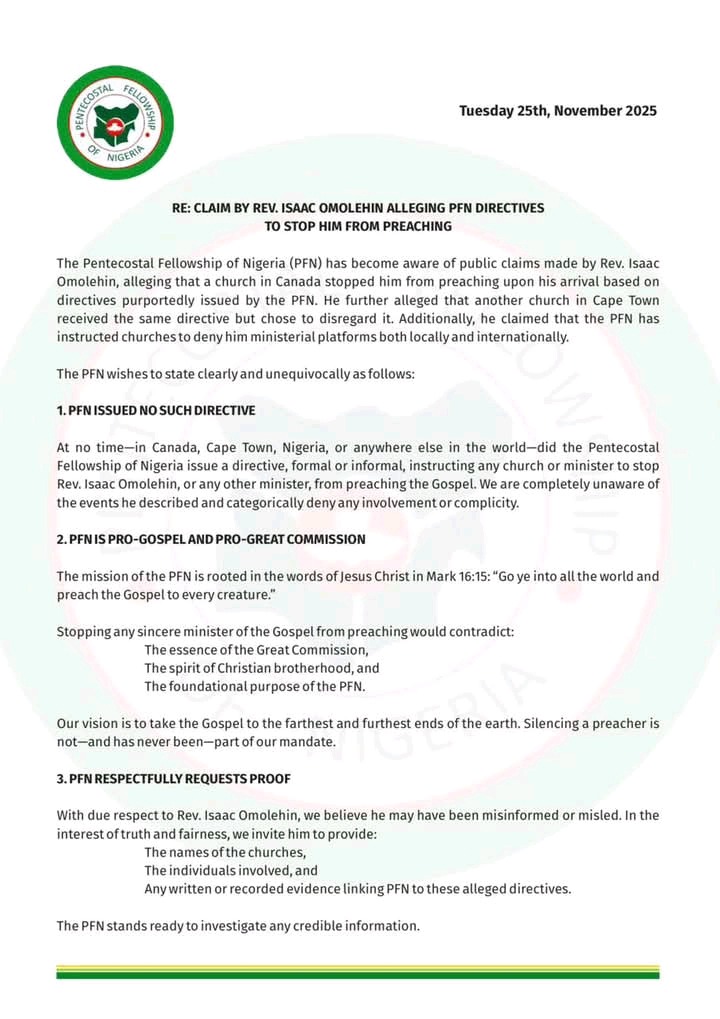 >
>
This latest development raises critical questions about the internal dynamics within Nigerian Pentecostalism. Why would such a rumor gain traction in the first place? What fault lines or existing tensions does it expose? Is it a reflection of genuine concerns or simply a case of miscommunication and speculation run wild?
The PFN statement emphasizes its commitment to unity and collaboration, especially during a period marked by insecurity and attacks on worshippers. They highlight challenges like kidnappings in Kwara, Kebbi, and Benue. It is a good thing, given the hardship faced by the country at large. Churches have a crucial role to play. The appeal for solidarity, prayer, and constructive engagement rings true, reflecting a desire to present a unified front.
Still, a simple denial doesn’t automatically resolve underlying issues. In any case, it serves as a reminder that even within a large organization like the PFN, differing opinions and approaches are inevitable. Navigating these complexities requires transparency, open dialogue, and a willingness to address concerns directly.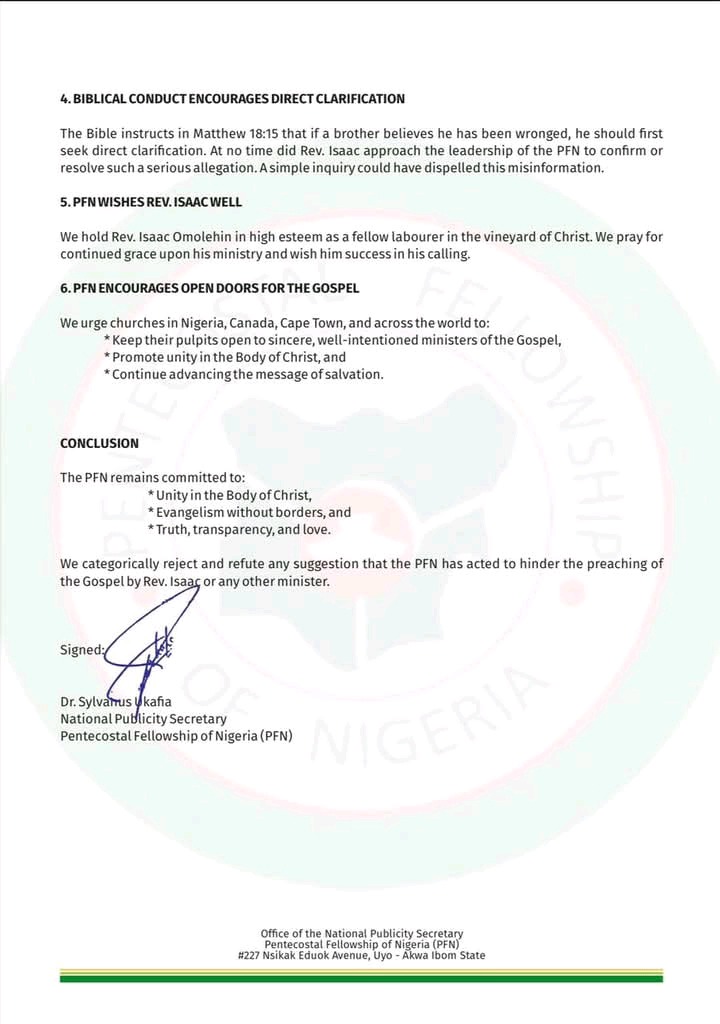 >
>
It’s worth noting that the PFN occupies a significant position within Nigeria’s religious landscape. Its pronouncements and actions carry considerable weight. The Fellowship influences not only the spiritual lives of its members but also social and political discourse. So, any perceived internal conflict or lack of cohesion can have wider implications.
This challenge underscores the constant need for strong leadership and clear communication. The PFN must continually work to foster an environment where diverse voices can be heard and concerns can be addressed without resorting to speculation and potentially divisive accusations.
The statement urging the church to stand together in prayer, compassion, and constructive engagement is commendable. In a nation grappling with numerous socio-economic and security challenges, the church plays a crucial role in providing hope, support, and advocacy. A united front is essential if the church wants to effect meaningful change.
Given these facts, it becomes crucial to examine the context in which these claims originated. Are there particular theological or leadership differences that might have contributed to the rumor? Understanding the root causes can help in addressing the issue more effectively.
Moreover, the increasing importance of media, especially social media, in shaping public perception is undeniable. Rumors spread like wildfire online, and misinformation can quickly gain traction. This reality necessitates proactive communication strategies to counter false narratives and maintain trust.
Looking ahead, the PFN’s response to this situation will be telling. Will they actively engage in dialogue with those who harbor concerns? Will they take steps to reinforce unity and address any underlying tensions? Their actions will speak louder than words.
It’s also important to remember that the Nigerian religious landscape is dynamic and complex. Various denominations and movements exist, each with its own distinct characteristics and approaches. Navigating this diversity requires respect, understanding, and a willingness to collaborate on common goals.
The PFN’s role in promoting interfaith dialogue and cooperation is also vital. Building bridges with other religious communities can help foster a more peaceful and tolerant society. This is especially crucial in a nation like Nigeria, where religious differences have sometimes been exploited for political gain.
I’ve seen this sort of thing play out before. Claims and denials are part and parcel of any large organization. This latest episode serves as a reminder that vigilance, transparency, and a commitment to unity are essential for navigating the complexities of the Nigerian religious landscape and maintaining the integrity and influence of the Pentecostal Fellowship of Nigeria. The challenge now lies in ensuring that this denial translates into tangible actions that promote genuine unity and address any underlying concerns. The church in Nigeria needs to maintain it’s light through truth, love and unity, nothing less.

![[post_title]](https://samony.com.ng/wp-content/uploads/2025/12/Parents-cancer-patients-say-lack-of-proton-therapy-in-Australia-300x169.jpeg?lm=6930A265 "Australia’s Proton Therapy Delay: A Cancer Treatment Gap Hurts Families")
![[post_title]](https://samony.com.ng/wp-content/uploads/2025/12/1764794476_After-nearly-30-years-Crucial-will-stop-selling-RAM-to-300x180.jpg?lm=6930A071 "DIY Nightmare? Crucial’s Shock Exit Signals RAM Price Hikes Ahead")
![[post_title]](https://samony.com.ng/wp-content/uploads/2025/12/1764789509_Triunfo-descomunal-del-Barca-en-un-Spotify-Camp-Nou-colosal-300x169.jpeg?lm=69308D08 "Football’s Fluidity: Barcelona vs Atletico")
![[post_title]](https://samony.com.ng/wp-content/uploads/2025/12/1764789516_You-came-out-of-nowhere-Lady-shares-encounter-with-2baba-300x157.jpg?lm=69308D0F "Navigating Fame, Love, and Loyalty: Hard Truths from a Life Inside Celebrity Relationships")

![[post_title]](https://samony.com.ng/wp-content/uploads/2025/12/Odegaard-on-his-return-Madueke-and-Brentford-Interview-1024x576.jpg?lm=6930A974 "Odegaard Just Dropped Arsenal’s Game Plan for Brentford (and It’s Fascinating)")
![[post_title]](https://samony.com.ng/wp-content/uploads/2025/12/1764794875_Ukraine-war-Drone-footage-shows-heavily-bombed-city-of-Myrnohrad-as-1024x683.jpg?lm=6930A200 "Myrnohrad’s Fall: Deciphering Attrition Warfare’s Human Cost Through Drone Intel")
![[post_title]](https://samony.com.ng/wp-content/uploads/2025/12/Parents-cancer-patients-say-lack-of-proton-therapy-in-Australia.jpeg?lm=6930A264 "Australia’s Proton Therapy Delay: A Cancer Treatment Gap Hurts Families")