

![[post_title]](https://samony.com.ng/wp-content/uploads/2025/11/1764186544_Three-turkey-mistakes-to-avoid-this-year-and-why-you-1024x683.jpg?lm=692759B3)
Thanksgiving meal safety: Navigating the culinary minefield
Thanksgiving: It’s that time of year when even seasoned home cooks can feel the pressure, tasked with creating a holiday feast while maintaining food safety. It’s a yearly event that presents unique challenges, specifically around how Americans handle the preparation of their meals for Thanksgiving. The US Centers for Disease Control and Prevention (CDC) data shows that food poisoning spikes during November and December. It’s not a coincidence. Mishandled turkey, stuffing and gravy have all played a role in past outbreaks, and sometimes, the consequences have been deadly.
You see, preparing large meals isn’t like cooking up a quick weeknight dinner. Big meals take longer to cook, but even more importantly, they also take far longer to cool down. That’s when the risks really start to compound. So, how do we minimize the risks and keep everyone healthy and happy this holiday season?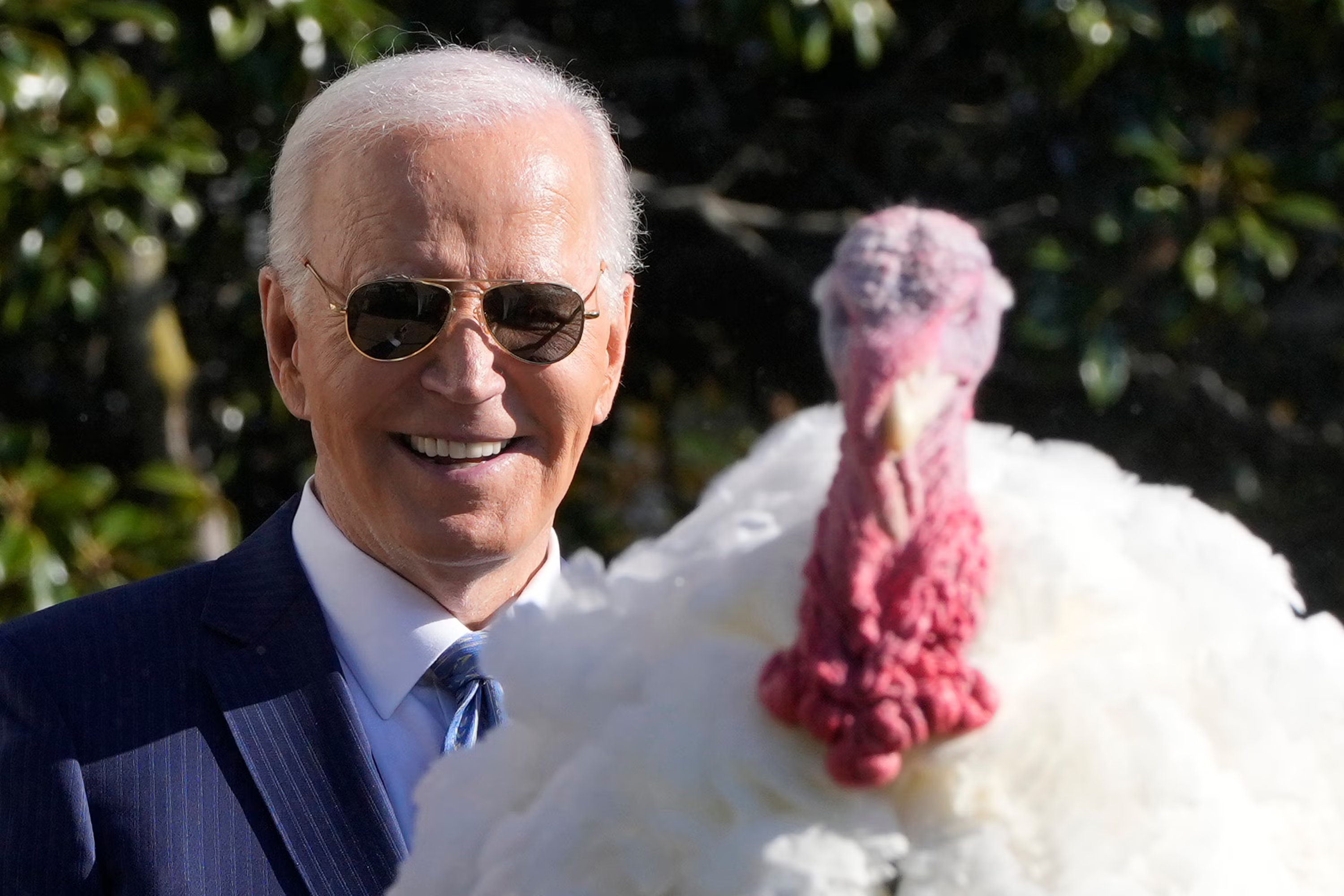 >
>
Let’s start with the star of the show: the Thanksgiving turkey. Butterball reports most U.S. hosts plan to cook a turkey this Thanksgiving. Turkey is delicious, but raw turkey can play host to salmonella, campylobacter, and other unwelcome bacteria. These bugs can contaminate everything – refrigerator shelves, sinks, even kitchen towels.
First, you need to thaw the turkey safely. The options? Refrigerator, microwave, or cold water. Each of these thawing approaches presents its own risks. The USDA recommends thawing a frozen turkey in the refrigerator for roughly 24 hours for every 4-5 pounds. When using a microwave or the cold water method, the turkey should be cooked immediately. A major pitfall that I’ve observed over the years: rinsing the turkey. Many cooks still do it, insisting it’s a necessary step. However, washing a turkey in the sink sprays bacteria everywhere, contaminating your kitchen. It’s far better to pat it dry with paper towels, toss them immediately, or use a kitchen towel you can disinfect afterwards.
Roasting time: The goal is 165 degrees Fahrenheit. Use a digital thermometer, and stick it into the thigh, being careful not to touch the bone. Don’t trust those plastic pop-up thermometers. They often pop long before the bird is actually safe to eat. Besides, judging doneness by the color of the skin, the disappearance of pink meat, or the clarity of the juices is a recipe for disaster. Those “indicators” can be misleading.>
Now, the sides. Mashed potatoes, gravy, green bean casserole – these are just as important as the turkey. The goal here is to avoid the “danger zone” – temperatures between 40 and 140 degrees Fahrenheit. Bacteria love to grow in that range. Keep hot foods hot and cold foods cold. Crucially, leftovers need to go into the refrigerator within two hours. That’s the general guidance. Quick cooling is the key. Store sliced turkey, mashed sweet potatoes, and gravy in shallow containers to help them cool down faster. If you put it in containers no more than 2 inches deep, you minimize the risk of germs growing.
Another critical step: cleanliness in the kitchen. This requires diligent practices to avoid foodborne illnesses. Before handling food, and certainly after touching raw poultry, wash your hands. I can’t emphasize this enough. Utilize separate cutting boards, knives, and utensils for raw meats and fresh produce. After food prep, be sure to clean all surfaces with soap and water, then sanitize with a disinfectant. Cleaning is the first step, and sanitizing is the second.
Thanksgiving is a joyous occasion, but it’s also a high-stakes culinary challenge. The key is to slow down, pay attention to the details, and remember that a little extra effort can make all the difference in keeping your loved ones safe and healthy. This is particularly true regarding turkey preparation and side dish management.
It’s worth pondering why we consistently repeat the same mistakes during Thanksgiving. Part of it is tradition, of course. But maybe it’s also a reluctance to change, to adopt new (and safer) practices. Yet, a willingness to learn and adapt is what separates a successful holiday from a potential food poisoning incident.
Given these facts, it’s wise to approach Thanksgiving with a balanced mix of tradition and caution. Enjoy the festivities, savor the food, and most importantly, do it safely. The best Thanksgiving memories are made when everyone is feeling well and enjoying the company, not when someone ends up spending the night regretting that second helping of gravy.
It’s been observed that the trends around food safety have remained pretty consistent over the years. What truly shifts is our awareness and the level of concern we bring to the holiday table. To that end, a little extra care can translate into a much more enjoyable experience for everyone involved. It’s not just about following a recipe; it’s about embracing a mindset of safety and well-being during this special occasion.

![[post_title]](https://samony.com.ng/wp-content/uploads/2025/12/I-Have-A-Wife-And-Five-Children-Catholic-Father-Explains.jpeg?lm=69313106 "Authenticity’s Price: A Priest’s Journey and the Church’s Crossroads")
![[post_title]](https://samony.com.ng/wp-content/uploads/2025/12/FG-Applauds-Nollywoods-Global-Impact-At-15th-Zuma-International-Film-300x169.jpg?lm=69313157 "FG Applauds Nollywood’s Global Impact At 15th Zuma International Film Festival – Arise News")


![[post_title]](https://samony.com.ng/wp-content/uploads/2025/12/1764831706_FG-pegs-6485bpd-oil-benchmark-okays-N1-5121-exchange-rate-for-300x179.jpg?lm=693131DD "Nigeria’s 2026 Budget: A Deep Dive")
![[post_title]](https://samony.com.ng/wp-content/uploads/2025/12/Googles-Antigravity-AI-deleted-a-developers-drive-and-then-apologized.webp-300x169.webp "Google’s Antigravity AI Wipes Developer’s Drive, Sparking Autonomy Concerns")

![[post_title]](https://samony.com.ng/wp-content/uploads/2025/12/1764833148_See-A24-trailer-cast-and-release-date-1024x576.webp "A24’s “Mother Mary”: Hathaway & Coel’s Sinister Secret We Can’t Wait to Uncover")
![[post_title]](https://samony.com.ng/wp-content/uploads/2025/12/1764833232_My-CEO-summoned-me-for-eating-in-the-same-restaurant-1024x555.jpg?lm=693137D4 "CEO Saw You Dining Out? Why Workplace Power Still Feels So Awkward")
![[post_title]](https://samony.com.ng/wp-content/uploads/2025/12/FG-Applauds-Nollywoods-Global-Impact-At-15th-Zuma-International-Film-1024x576.jpg?lm=69313157 "FG Applauds Nollywood’s Global Impact At 15th Zuma International Film Festival – Arise News")
