

Navigating the Murky Waters of Political Commentary: A Critical Look at Fox News’ Coverage of the Tennessee Special Election
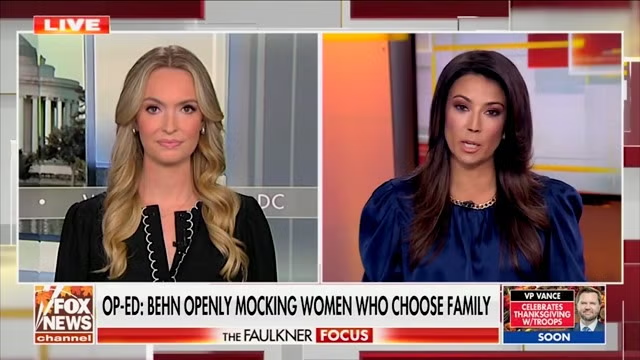
The political landscape is often a theater of the absurd, and the recent coverage surrounding the special election in Tennessee’s 7th district is no exception. Watching from the sidelines, I’ve noticed a familiar pattern emerging, one where objective analysis gives way to partisan narratives. Fox News’ handling of Democratic candidate Aftyn Behn certainly raises eyebrows, urging us to dissect what’s truly happening beneath the surface.
At first glance, this is a local election. Yet, the intensity of the media coverage, particularly from conservative outlets, suggests something larger is at stake. The GOP, it appears, is feeling the heat in what should be a reliably red district. Polls indicate a surprisingly tight race between Behn and Republican nominee Matt Van Epps. It appears Democratic momentum, fueled by recent over-performances in other elections and Trump’s waning approval, is causing some nervousness.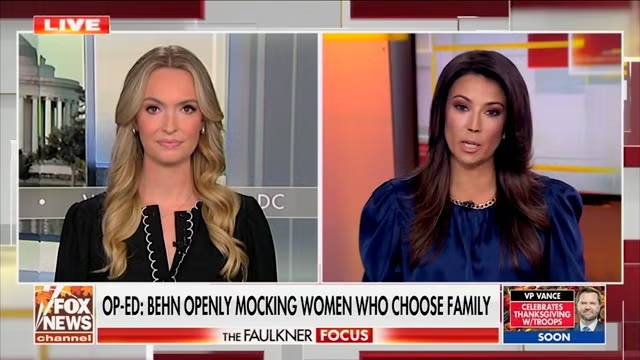 >
>
This anxiety manifests in the form of increasingly pointed attacks on Behn. Portraying her as the “AOC of Tennessee” or a “crazy left-wing radical” is a tried-and-true tactic in the conservative playbook. What stands out, however, is the personal nature of the attacks, specifically Julie Banderas’ comments about Behn’s upbringing.
Banderas seized on a resurfaced clip from a 2020 podcast where Behn discussed her views on motherhood and career aspirations. Behn related a dream about proclaiming “I don’t want children, I want power,” and referenced her mother’s advice to prioritize career over family. Banderas’ response was blunt: “Obviously, her mother did not do a very good job in raising her.”
This kind of rhetoric is worrying. It feels like a step too far, even in the often-uncivil world of political commentary. Framing a candidate’s personal choices and family dynamics as a reflection of their competence is a dangerous game. It also reveals a certain vulnerability. When the debate shifts from policy to personal attacks, it often signals that the attacker is struggling to defend their own position on the issues.>
Now, let’s consider the broader context. The stakes are undeniably high. A Democratic victory in Tennessee’s 7th district would shrink the Republican majority in the House. Couple this with Marjorie Taylor Greene’s announced departure and the upcoming special elections in Democrat-leaning districts, and the GOP’s control is precarious. This is the backdrop against which this media frenzy is playing out.
It is easy to dismiss this as simply partisan politics. Still, it’s important to recognize the potential ramifications. When media outlets resort to personal attacks and character assassination, they undermine the very foundation of informed public discourse. This is not just about one election. It’s about the kind of political environment we want to foster.
Of course, Behn’s comments themselves are subject to scrutiny. Her remarks about “hating Nashville” could alienate voters. Her views on motherhood might not resonate with traditional values. Indeed, I am sure there are many who disagree with the policies she promotes. Those aspects of her campaign are all legitimate grounds for debate. The issue arises when commentary veers into the realm of personal attacks and judgments about someone’s family.
There’s a deeper issue here. News outlets, particularly those with a clear political agenda, should recognize their role in shaping public opinion. Sensationalizing a personal conflict in the manner seen here does not merely inform; it aims to sway, and often, to divide.
It prompts a critical question: What responsibility do media personalities have in ensuring respectful, informed dialogue, even amidst heated political contests? The answer, in my view, is considerable. The ability to influence public sentiment is a power that should be wielded with caution, recognizing that the narratives formed can have far-reaching effects on how we perceive one another and engage in democratic processes.
What I’ve seen over the years is that focusing solely on the personalities involved obscures the larger issues at stake. It’s about the future of healthcare, education, the economy, and the myriad other challenges facing the nation.
I’m not taking sides here. However, it’s important to call out questionable tactics when we see them. As consumers of news, we need to be discerning, critical, and demand more from our media. We should expect substance over sensationalism, and informed debate over personal attacks. Because, in the end, it is the quality of our discourse that shapes the quality of our democracy.


![[post_title]](https://samony.com.ng/wp-content/uploads/2025/12/4-Reasons-Tomatoes-Can-Upset-Your-Stomach-300x169.jpg?lm=6930DA5E "Decoding Tomato Troubles: A Gut-Level Guide to Digestive Harmony")
![[post_title]](https://samony.com.ng/wp-content/uploads/2025/12/NGX-Deepens-Market-Offerings-With-Commercial-Paper-Listings-300x212.png?lm=6930DAA8 "Nigeria’s Risky Bet: Will NGX’s New Debt Play Actually Pay Off?")
![[post_title]](https://samony.com.ng/wp-content/uploads/2025/12/1764809392_Nato-hits-back-at-Putins-threat-of-war-in-Europe-300x200.jpeg?lm=6930DAB4 "Geopolitics on Edge: Is Wider European Conflict a Rising Threat?")
![[post_title]](https://samony.com.ng/wp-content/uploads/2025/12/Senate-summons-finance-education-ministers-over-collapse-of-30m-Safe-300x200.jpeg?lm=6930DB39 "$44 Million for Safe Schools: Where Did It Go?")

![[post_title]](https://samony.com.ng/wp-content/uploads/2025/12/Neymar-vai-para-o-jogo-Santos-divulga-lista-de-relacionados-1024x682.jpg?lm=6930E22A "Neymar’s Shadow: Santos’ Survival Hinges on More Than Just a Legend’s Presence")
![[post_title]](https://samony.com.ng/wp-content/uploads/2025/12/Burna-Boy-Offers-to-Pay-Burial-Costs-for-Children-Killed.jpg?lm=6930DBD8 "Burna Boy Offers Funeral Support After Stockton Shooting")
