

![[post_title]](https://samony.com.ng/wp-content/uploads/2025/11/1764101740_Canadas-most-decorated-female-Olympian-hit-with-two-year-ban-over-1024x683.jpg?lm=69260E6F)
Penny Oleksiak’s Suspension: A Critical Look at Anti-Doping’s Reach
The news of Penny Oleksiak, Canada’s decorated Olympian, receiving a two-year suspension raises some interesting points about anti-doping regulations. It’s not about performance-enhancing drugs; it centers around “whereabouts failures.” Essentially, she didn’t properly update her location information for out-of-competition testing. This highlights an often-overlooked side of elite sports.
The Case of Oleksiak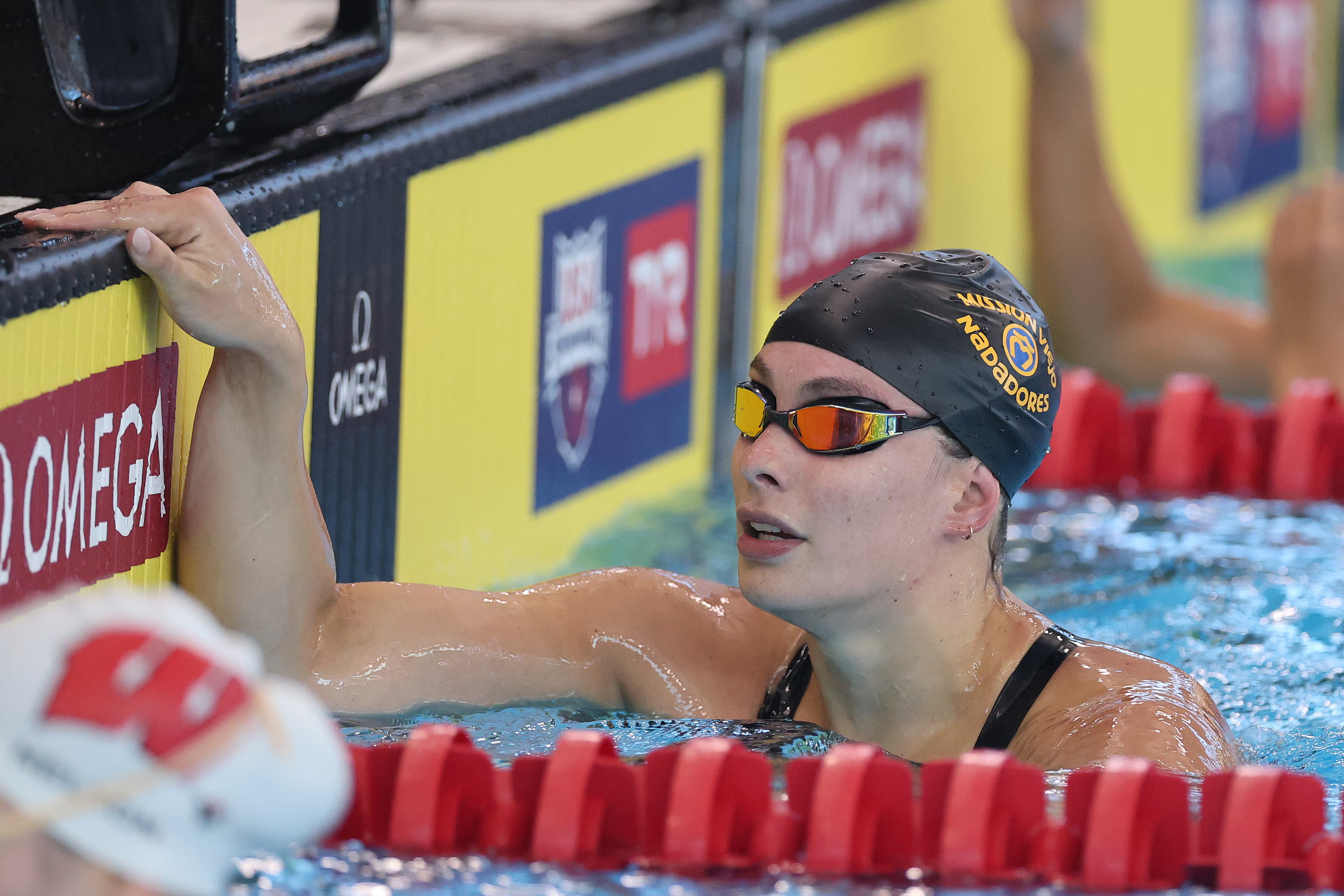 >
>
Oleksiak’s case is straightforward. The International Testing Agency (ITA) issued the ban because of three whereabouts failures within a year. As a result, her ineligibility stretches to July 2027, and any competitive results from June 2025 onward get tossed out. This includes medals, points, the whole deal. Swimming Canada has stated its support for anti-doping rules, stressing the need for a level playing field. The CEO, Suzanne Paulins, did acknowledge the errors as inadvertent, noting the athlete didn’t use banned substances.
The Whereabouts Rule
Now, let’s dive into the “whereabouts rule.” Athletes have to tell anti-doping authorities where they’ll be for at least an hour each day. This enables unannounced, out-of-competition testing. Miss those updates, and you could face a ban, ranging from one to two years. Oleksiak pulled out of the World Championships earlier this year because of the issue, emphasizing that it wasn’t about banned substances but about updating information properly.>
A Question of Balance
This makes one wonder if the regulations are overly burdensome, particularly when no actual doping is involved. You’ve got athletes, often young, juggling intense training, travel, and personal lives. Requiring them to maintain a perfect log of their whereabouts seems to place an immense administrative burden on them. Are we prioritizing paperwork over actual doping deterrence?
I’ve seen athletes struggle with the simplest administrative tasks, and this is not one of them. However, a misstep here can mean the end of a career.
Swimming Canada backed Oleksiak initially, calling it an “administrative mistake” and saying they believed she was clean. That support is commendable. Still, the rules are the rules. It’s a tough spot for everyone involved.
The Bigger Picture: Anti-Doping in Sports
What does this say about the state of anti-doping efforts? It indicates a system that’s intensely focused on catching potential violations, sometimes at the expense of common sense. The rationale is clear: to ensure fair competition. But the unintended consequence might be penalizing athletes for minor administrative slip-ups.
Consider the impact on Oleksiak. She’s not just a swimmer; she’s a role model, a national hero. This suspension tarnishes her reputation, regardless of the circumstances. It forces her to sit on the sidelines during her prime years. And for what? Because of a paperwork problem?
It’s tempting to ask: Are we losing sight of the forest for the trees?
The goal, of course, is clean sport. Few would argue against that. However, the means to that end need scrutiny. Could there be a more streamlined, less punitive way to enforce these regulations? Perhaps a system that offers more flexibility and support for athletes, rather than immediately resorting to suspensions?
A Different Approach?
One possible solution could involve a tiered system of penalties. A first-time whereabouts failure might warrant a warning or fine, not a two-year ban. Repeated offenses, or evidence of intentional evasion, could then trigger harsher penalties. Education programs also need to be more prominent. Reinforce the importance of compliance without making athletes feel like they are constantly walking on eggshells.
Moreover, the anti-doping agencies need to be more transparent in their processes. Explaining how these rules benefit athletes can help gain buy-in from athletes who may see it as a hindrance. It creates a sense of partnership rather than an adversarial relationship.
The complexities surrounding anti-doping are always in motion. It is likely to be constantly debated.
Looking Ahead
Oleksiak’s case forces us to re-examine the anti-doping protocols. This incident underscores a need to improve communication, add flexibility, and make sure the punishment matches the infraction. As it stands, the system, while well-intentioned, risks unfairly penalizing athletes for what appear to be unintentional errors. Let’s hope this episode leads to changes. These changes could bring more balance to anti-doping efforts. In the end, the sport as a whole should benefit. A holistic approach that combines strict oversight with athlete support would ultimately yield fairer and more credible results.

![[post_title]](https://samony.com.ng/wp-content/uploads/2025/12/Warriors-sign-Seth-Curry-for-remainder-of-season.jpeg "Warriors sign Seth Curry for remainder of season")
![[post_title]](https://samony.com.ng/wp-content/uploads/2025/12/1764745476_Ukraine-Russia-war-latest-Trump-envoys-fail-to-secure-peace-deal.jpeg "Ukraine-Russia war latest: Trump envoys fail to secure peace deal after Putin tells Europe he’s ready for war")
![[post_title]](https://samony.com.ng/wp-content/uploads/2025/12/1764744909_FG-Deploys-240-Solar-Powered-E-Tricycles-To-12-Universities.jpg "FG Deploys 240 Solar Powered E- Tricycles To 12 Universities :")
![[post_title]](https://samony.com.ng/wp-content/uploads/2025/12/1764744691_2027-Nasarawa-APC-governorship-aspirant-vows-to-prioritise-power-agriculture-if.jpg "2027: Nasarawa APC governorship aspirant vows to prioritise power, agriculture if…")
![[post_title]](https://samony.com.ng/wp-content/uploads/2025/12/1764744746_Chukwueze-Scores-Two-Iwobi-One-as-Nigerian-Duo-Nearly-Spark.jpeg "Chukwueze Scores Two, Iwobi One as Nigerian Duo Nearly Spark Famous Fulham Comeback")

![[post_title]](https://samony.com.ng/wp-content/uploads/2025/12/The-young-man-involved-in-the-attempted-Christmas-Day-bombing.jpeg "Nigerian Terrorism: Ideology’s Grip on Affluent Minds")
![[post_title]](https://samony.com.ng/wp-content/uploads/2025/12/1764747077_Over-15-years-Man-visits-secondary-school-to-check.jpg "Planting Seeds of Purpose: How Early Climate Action Shapes Lifelong Commitment")
