


Nigeria’s World Cup Failure: A Critical Look Beyond the Surface
Nigeria’s failure to qualify for the 2026 FIFA World Cup stings. Official reactions, like the one from National Sports Commission (NSC) Director-General Bukola Olopade, offer a glimpse into the behind-the-scenes efforts. These reactions are useful, but we can learn much more by examining the larger patterns at play.
Olopade defends the “strong, collaborative structure” designed to support the Super Eagles. Yet, the result speaks for itself. Money poured in, logistics were handled, but the team still fell short. One has to ask, was the structure truly as strong as it appeared? Or was it a facade masking deeper systemic issues? >
>
He points to longstanding relationships among officials as an advantage. Maybe. But sometimes familiarity breeds complacency. Groupthink can easily creep into these situations, stifling innovation and honest assessment. The key point is that cohesion does not necessarily result in success.
It’s easy to point fingers after a failure, and Olopade wisely avoids that. He emphasizes collective responsibility. Fair enough. But accountability shouldn’t disappear into the collective. Someone, somewhere, made decisions that contributed to this outcome. Identifying those points of failure is crucial for future improvement.
The NSC head notes the government provided financial backing and the NFF supplied the team with necessary resources. It raises a pertinent question: Is throwing money at a problem really a solution? Often, it feels like a band-aid on a much deeper wound. Money can mask organizational weaknesses and a lack of clear vision.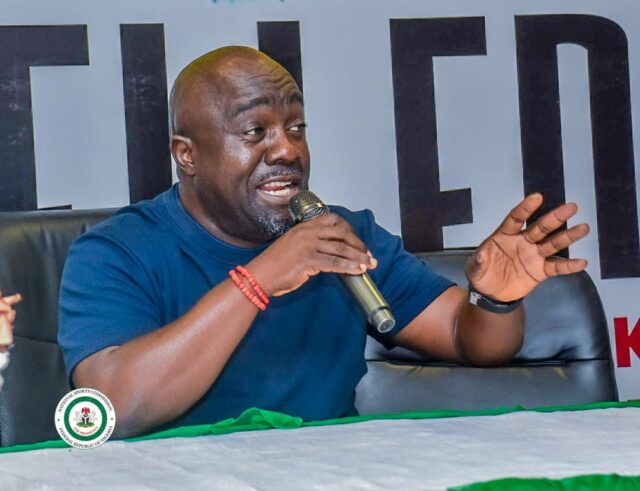 >
>
His admission that Nigeria shouldn’t have been in a playoff situation rings true. Nigeria, with its rich footballing history and talent pool, should be a dominant force in African football. This acknowledgement avoids the blame game and highlights the problems in the earlier stages of the qualification process.
The apology to Nigerians is a necessary gesture, but it needs to be more than just words. A genuine commitment to reassessing planning, preparation, and long-term development is what fans truly want. And there needs to be tangible action, not just promises.
Looking ahead, what needs to change? Youth development programs. These have been talked about for years, but systematic investment and professional coaching are still lacking.
The quality of the Nigerian Professional Football League (NPFL). Without a strong domestic league, players don’t get the consistent, high-level competition they need to develop. Creating a league that is both attractive to fans and beneficial to players remains a major hurdle.
Coaching appointments. The revolving door of coaches creates instability and disrupts long-term planning. We need a clear philosophy and a consistent approach to player development, and this requires patience and a willingness to stick with a plan.
Also worth noting, the influence of agents. Some agents seem more focused on quick profits than the long-term development of players. The NFF needs to find a way to regulate agent activity and ensure that players are getting sound advice.
The issue with infrastructure is another hurdle. Substandard training facilities and poorly maintained stadiums hinder player development and create a negative environment. Investing in modern facilities is essential for creating a professional atmosphere.
Finally, there is a culture of corruption within Nigerian football. Allegations of bribery and match-fixing have plagued the sport for years, eroding trust and undermining fair play. Cleaning up the sport’s governance is fundamental to its success.
Looking back at similar situations in the past, a pattern emerges: talent is not enough. Structure, discipline, and a long-term vision are equally important. Nigeria needs to learn from past failures and create a sustainable model for success.
It’s tempting to be cynical. Yet, I’ve seen flickers of hope, moments of brilliance from young players. The passion for football is undeniable. If we can harness that passion and channel it into a well-organized, transparent, and forward-thinking system, Nigeria can once again become a dominant force in world football.
The failure to qualify for the 2026 World Cup should be a wake-up call, a catalyst for change. But this change must be systemic, addressing the deep-rooted issues that have plagued Nigerian football for far too long. Rebuilding will demand hard work, honesty, and a commitment to excellence at every level.

![[post_title]](https://samony.com.ng/wp-content/uploads/2025/12/Warriors-sign-Seth-Curry-for-remainder-of-season.jpeg "Warriors sign Seth Curry for remainder of season")
![[post_title]](https://samony.com.ng/wp-content/uploads/2025/12/1764745476_Ukraine-Russia-war-latest-Trump-envoys-fail-to-secure-peace-deal.jpeg "Ukraine-Russia war latest: Trump envoys fail to secure peace deal after Putin tells Europe he’s ready for war")
![[post_title]](https://samony.com.ng/wp-content/uploads/2025/12/1764744909_FG-Deploys-240-Solar-Powered-E-Tricycles-To-12-Universities.jpg "FG Deploys 240 Solar Powered E- Tricycles To 12 Universities :")
![[post_title]](https://samony.com.ng/wp-content/uploads/2025/12/1764744691_2027-Nasarawa-APC-governorship-aspirant-vows-to-prioritise-power-agriculture-if.jpg "2027: Nasarawa APC governorship aspirant vows to prioritise power, agriculture if…")
![[post_title]](https://samony.com.ng/wp-content/uploads/2025/12/1764744746_Chukwueze-Scores-Two-Iwobi-One-as-Nigerian-Duo-Nearly-Spark.jpeg "Chukwueze Scores Two, Iwobi One as Nigerian Duo Nearly Spark Famous Fulham Comeback")

![[post_title]](https://samony.com.ng/wp-content/uploads/2025/12/The-young-man-involved-in-the-attempted-Christmas-Day-bombing.jpeg "Nigerian Terrorism: Ideology’s Grip on Affluent Minds")
![[post_title]](https://samony.com.ng/wp-content/uploads/2025/12/1764747077_Over-15-years-Man-visits-secondary-school-to-check.jpg "Planting Seeds of Purpose: How Early Climate Action Shapes Lifelong Commitment")
