

Decoding Nigeria’s Anxiety: When Balloons Trigger Panic
Sisi Yemmie’s recent observation about a party in Nigeria – balloons popping and causing widespread panic – hit a nerve. It wasn’t just a funny anecdote. It was a glimpse into a deeper unease simmering beneath the surface of daily life. This incident underscores a crucial point: Nigeria, it seems, is collectively on edge.
The responses to her tweet on X (formerly Twitter) confirm this. People get it. They understand the ingrained hyper-vigilance. We’ve all become conditioned to interpret sudden, sharp sounds as potential threats, a sad reality reflecting the nation’s security challenges.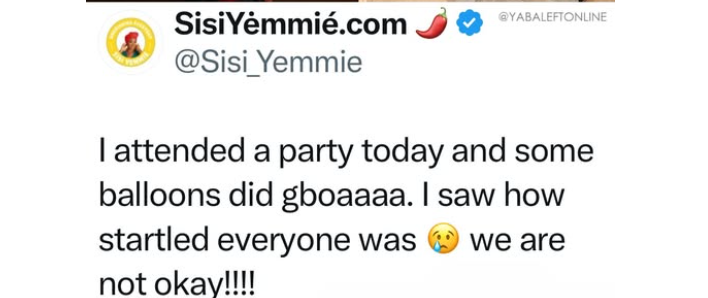 >
>
It’s easy to write this off as overreaction. Yet, that dismisses the lived experiences of millions. Think about the context. Years of insecurity, from banditry and kidnapping to terrorism and communal clashes, have created a pervasive sense of vulnerability. Loud noises, once merely startling, now carry the weight of potential danger.
The ubiquity of this anxiety deserves a closer examination. It’s not just about personal safety; it permeates various sectors. Consider how it affects investment. Is it any wonder foreign investors might hesitate when the population lives with such heightened stress levels? The cost of doing business rises, risk assessments become more complicated, and the overall economic outlook is clouded.
This challenge extends beyond economics. Social cohesion suffers. Trust erodes when your neighbor’s startled reaction to a balloon mirrors your own fear. Communities become fragmented, and the space for open dialogue shrinks. That’s a problem.>
It’s worth noting that this isn’t unique to Nigeria, of course. Post-conflict societies and regions grappling with instability frequently exhibit similar patterns of collective anxiety. However, Nigeria’s case highlights the urgent need for a multi-pronged approach.
What can be done? A simplistic answer would be “improve security.” Naturally, that’s paramount. Enhanced security measures and intelligence gathering are critical. But security alone isn’t the complete remedy. It’s like treating a symptom instead of the disease.
We must also look at the underlying socio-economic factors that fuel insecurity and despair. Poverty, unemployment, and lack of access to education create fertile ground for unrest and criminal activity. Addressing these issues requires long-term investment in human capital and sustainable development programs.
Mental health support cannot be overlooked. Prolonged exposure to trauma takes a toll. Accessible mental health services are essential to help people process their experiences and develop coping mechanisms. Ignoring this aspect is a recipe for long-term societal problems.
It’s also vital to foster a sense of community and resilience. Strengthening local institutions, promoting dialogue, and empowering citizens to participate in governance can help rebuild trust and create a more inclusive society. These things take time, however.
There are potential benefits, though. Innovation often arises from hardship. Maybe we’ll see a rise in community-based security initiatives. Perhaps this shared anxiety will spur greater civic engagement. It’s possible.
I’ve seen similar trends in other developing nations facing analogous crises. The response is rarely uniform. Some people become apathetic, while others become fiercely proactive. The key lies in channeling that energy constructively.
The situation demands more than just government action. It requires a collective effort from all stakeholders – civil society organizations, religious leaders, the private sector, and individual citizens. Everyone has a role to play in building a more secure and resilient Nigeria.
Given these facts, expecting immediate solutions is unrealistic. It’s a marathon, not a sprint. Patience, persistence, and a willingness to adapt are essential.
Ultimately, Sisi Yemmie’s balloon story serves as a stark reminder. It’s a wake-up call to confront the underlying anxieties that plague Nigeria. Recognizing the problem is the first step toward finding sustainable solutions. The work continues.



![[post_title]](https://samony.com.ng/wp-content/uploads/2025/12/4-Reasons-Tomatoes-Can-Upset-Your-Stomach-300x169.jpg?lm=6930DA5E "Decoding Tomato Troubles: A Gut-Level Guide to Digestive Harmony")
![[post_title]](https://samony.com.ng/wp-content/uploads/2025/12/NGX-Deepens-Market-Offerings-With-Commercial-Paper-Listings-300x212.png?lm=6930DAA8 "Nigeria’s Risky Bet: Will NGX’s New Debt Play Actually Pay Off?")
![[post_title]](https://samony.com.ng/wp-content/uploads/2025/12/1764809392_Nato-hits-back-at-Putins-threat-of-war-in-Europe-300x200.jpeg?lm=6930DAB4 "Geopolitics on Edge: Is Wider European Conflict a Rising Threat?")
![[post_title]](https://samony.com.ng/wp-content/uploads/2025/12/Senate-summons-finance-education-ministers-over-collapse-of-30m-Safe-300x200.jpeg?lm=6930DB39 "$44 Million for Safe Schools: Where Did It Go?")

![[post_title]](https://samony.com.ng/wp-content/uploads/2025/12/Neymar-vai-para-o-jogo-Santos-divulga-lista-de-relacionados-1024x682.jpg?lm=6930E22A "Neymar’s Shadow: Santos’ Survival Hinges on More Than Just a Legend’s Presence")
![[post_title]](https://samony.com.ng/wp-content/uploads/2025/12/Burna-Boy-Offers-to-Pay-Burial-Costs-for-Children-Killed.jpg?lm=6930DBD8 "Burna Boy Offers Funeral Support After Stockton Shooting")
